
kilpos lipnumo stiprumo matavimas
Tikslus klijų stiprumo bandymas
ASTM D6195
Apie mus
ASTM D6195 in Adhesive Test Methods
ASTM D6195 is a standardized method used to evaluate the tack strength of pressure-sensitive adhesives through controlled kilpos sukibimo bandymas procedures. It provides a quantitative measure of how strongly an adhesive bonds to a stainless steel surface under very light contact pressure.
In modern adhesive test methods, ASTM D6195 plays a critical role in quality control, product development, and comparative evaluation of adhesive formulations used in tapes, labels, and industrial bonding systems.
The method is widely adopted because it simulates a real-world “instant stick” condition, where adhesives must form a bond immediately upon contact
Test Principle of ASTM D6195
The ASTM D6195 method is based on a simple but highly sensitive principle:
A strip of adhesive material is formed into a loop and brought into contact with a standardized stainless steel surface. The only applied force is the weight of the loop itself. Once contact is made, the loop is immediately withdrawn, and the force required to detach it is recorded.
This measured peak force represents the adhesive’s tack strength.
Key influencing factors include:
- Adhesive formulation and viscosity
- Backing stiffness and thickness
- Contact area consistency
- Surface cleanliness of substrate
- Contact time (kept extremely short in testing)
Because of its sensitivity, kilpos sukibimo bandymas is widely used in both research and industrial quality control environments.
01
ASTM D6195
Standartiniai bandymų metodai, skirti slėgiui jautrių klijų sukibimo stiprumui nustatyti. Šis metodas nustato, kaip išmatuoti didžiausią jėgą, reikalingą klijų kilpai atskirti nuo standartizuoto paviršiaus.
02
PSTC16
Standartinis bandymų metodas, kurį taiko Spaudimui jautrių juostų taryba ir kuris plačiai naudojamas juostų ir etikečių pramonėje.
03
FLANT9
Dažniausiai naudojamas pramonės standartas kilpų lipnumui vertinti, ypač pakuočių medžiagoms.
Test Methods in ASTM D6195
ASTM D6195 defines two main approaches:
01
Test Method A – Tensile Tester Method
This method uses a tensile testing system and requires a 7-inch specimen strip. It is suitable for laboratories already equipped with universal tensile testing systems.
It measures:
- Peak detachment force
- Adhesion failure behavior
- Comparative adhesive performance
02
Test Method B – Loop Tack Tester Method
This method uses a dedicated kilpos lipnumo testeris and is the most direct approach for routine adhesive evaluation. It requires a 5-inch specimen strip, which is specifically optimized for loop formation stability.
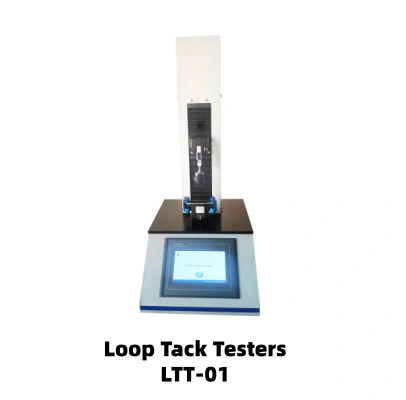
Svetainė Loop Tack Tester LTT-01 from Cell Instruments is designed primarily for Method B, ensuring:
- Standard-compliant loop formation
- Stable contact pressure control
- High repeatability in kilpos sukibimo bandymas
- Fast testing cycles for QC environments
Method B is widely preferred in production quality control because it improves consistency and reduces operator variability.
Application of Loop Tack Testing
ASTM D6195 is widely applied across industries involving pressure-sensitive adhesives:
- Packaging tapes and sealing films
- Self-adhesive labels and stickers
- Medical tapes and wound dressings
- Automotive adhesive components
- Industrial bonding materials
- Consumer adhesive products
In all these applications, tack strength determines how quickly and reliably the product can bond upon application.
slėgiui jautrių klijų lipnumo bandymas
Importance of Tack Strength in Adhesive Performance
Understanding tack strength is essential because it directly influences:
- Initial adhesion performance
- Ease of application
- Production line efficiency
- End-user experience
- Product reliability in real use conditions
Unlike peel or shear tests, kilpos sukibimo bandymas focuses on immediate bonding behavior, making it a unique and essential part of adhesive test methods.
Cell Instruments Loop Tack Tester LTT-01
Svetainė Cell Instruments LTT-01 Loop Tack Tester is specifically designed for ASTM D6195 Method B loop tack testing, providing a dedicated solution for pressure-sensitive adhesive evaluation.
Key advantages include:
- Optimized for Method B specimen geometry (5-inch strips)
- Stable and repeatable loop formation system
- Accurate measurement of tack strength
- High efficiency for routine QC testing
- Compliance with ASTM D6195 standard requirements
This makes the LTT-01 particularly suitable for manufacturers requiring consistent and efficient adhesive performance evaluation in production environments.
Dažnai užduodami klausimai
What is ASTM D6195 used for?
ASTM D6195 is used to measure the tack strength of pressure-sensitive adhesives using kilpos sukibimo bandymas. It evaluates how strongly an adhesive bonds immediately upon contact with a standardized surface.
What is the difference between Method A and Method B in ASTM D6195?
Method A uses a tensile tester with a 7-inch specimen strip, while Method B uses a dedicated loop tack tester with a 5-inch strip. Method B is more commonly used for routine quality control due to its simplicity and higher repeatability.
Why is loop tack testing important in adhesive evaluation?
Kilpos sukibimo bandymas measures the instant bonding performance of adhesives. It is essential for applications like tapes, labels, and packaging where immediate adhesion is required without pressure or curing time.
What materials can be tested under ASTM D6195?
The method is suitable for pressure-sensitive adhesives used in tapes, labels, films, medical adhesives, and industrial bonding products. It is widely applied in adhesive test methods for quality control and R&D.
What does tack strength indicate?
Tack strength represents the initial adhesion force when an adhesive first contacts a surface. It reflects how quickly and effectively an adhesive can form a bond under minimal pressure.
 LT
LT  EN
EN  AR
AR  BG
BG  CS
CS  DA
DA  DE
DE  EL
EL  ES
ES  ET
ET  FI
FI  FR
FR  HU
HU  ID
ID  IT
IT  JA
JA  KO
KO  LV
LV  NB
NB  NL
NL  PL
PL  PT
PT  RO
RO  RU
RU  SK
SK  SL
SL  SV
SV  TR
TR  UK
UK