Packaging tapes are essential components in the packaging industry, used for sealing, securing, and protecting products during shipping and storage. To ensure that these tapes perform reliably, it is crucial to evaluate their adhesion properties through testing methods such as loop tack testing. This test helps determine the initial adhesion strength of packaging tapes, ensuring they provide a secure bond for a variety of applications. In this article, we will explore the significance of loop tack testing, the role of loop tack testers, and how ASTM D6195 standards guide these tests for packaging tapes.
What is Loop Tack Testing?
Loop tack testing is a procedure used to measure the adhesion strength of pressure-sensitive adhesives (PSAs) on materials like packaging tapes. The test involves applying the tape to a surface and measuring the force required to peel it off after the tape has been pressed onto the surface. The results provide insights into the tape’s initial tack—its ability to bond to surfaces upon immediate contact without the need for additional pressure or heat.
This test is critical for packaging applications, as tapes used for sealing boxes, cartons, or pouches must provide sufficient adhesion to prevent the package from opening or coming apart during handling, transport, or storage. The loop tack test evaluates this crucial characteristic by simulating real-world conditions where quick adhesion is necessary.
How is Loop Tack Testing Performed?
Loop tack testing is typically performed using a specialized instrument known as a loop tack tester. The process involves the following steps:
- Preparation: A sample of the packaging tape is cut to a standard size and applied to a flat, smooth surface.
- Formation of a Loop: The tape is then folded back onto itself to form a loop, which is held in place by the tester.
- Peel Test: The tester applies a uniform force to peel the tape from the surface, and the force required to remove the tape is measured.
- Measurement: The tester records the maximum force required to peel the tape, which represents its tack strength.
This test helps determine whether the packaging tape provides the necessary adhesion to hold a package securely under normal conditions.
ASTM D6195: Standard for Loop Tack Testing
The ASTM D6195 standard outlines the procedure and requirements for performing loop tack testing. This standard provides specific guidelines to ensure consistency and accuracy across tests, enabling manufacturers and quality control teams to evaluate and compare different packaging tapes. Some key points from ASTM D6195 include:
- Test Method: The standard describes how to apply the tape to the test surface, form the loop, and peel it off at a specified speed to measure the loop tack force.
- Test Conditions: ASTM D6195 specifies environmental conditions such as temperature and humidity to ensure consistent results. It also provides the ideal pressure for the tape application to ensure reliable measurements.
- Standardized Equipment: The use of loop tack testers that adhere to the specifications outlined in ASTM D6195 ensures that the tests are conducted with precision and that results are comparable across different testing environments.
By following ASTM D6195, manufacturers can ensure that their packaging tapes meet the necessary performance standards for adhesion and reliability.
Why is Loop Tack Testing Crucial for Packaging Tapes?
Packaging tapes are designed to offer strong initial adhesion to a variety of substrates, and this is where loop tack testing comes in. The adhesion performance of packaging tapes can affect the overall quality and security of the package. A tape that doesn’t adhere properly can cause a package to open during transport, potentially leading to product damage, contamination, or loss.
Loop tack testing is essential for the following reasons:
- Quality Assurance: It helps verify that the packaging tapes are manufactured to the required adhesion standards, ensuring that they will perform as expected in real-world applications.
- Consistency: Regular loop tack testing ensures that batches of packaging tapes are consistent in their performance, reducing the risk of faulty tapes entering the market.
- Safety: Reliable tape adhesion prevents packaging failures, ensuring the safe delivery of goods.
- Material Selection: Manufacturers can evaluate different adhesive formulations and materials to determine which offers the best initial tack and long-term reliability.
Cell Instruments Loop Tack Tester: A Reliable Solution
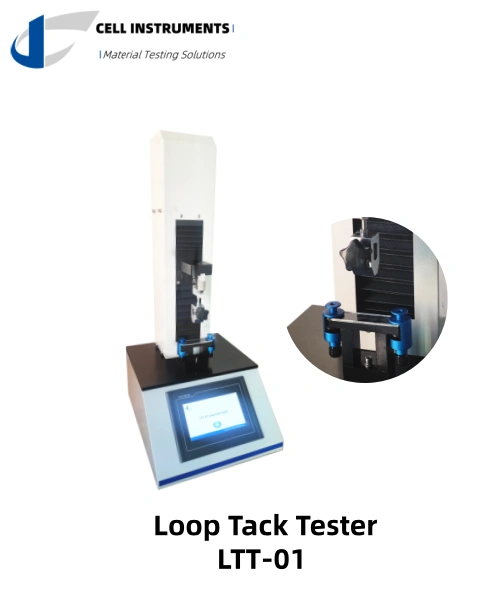
To carry out loop tack testing accurately, having the right equipment is crucial. The Cell Instruments Loop Tack Tester offers an excellent solution for testing packaging tapes. Designed to meet the requirements of ASTM D6195, this tester provides precise measurements of the force required to peel the tape from a surface, ensuring that manufacturers can evaluate the adhesive strength of their products reliably.
The Cell Instruments Loop Tack Tester is easy to use and provides fast, repeatable results, making it an ideal tool for quality control teams. With this tester, manufacturers can ensure that their packaging tapes meet the highest standards of adhesion, ensuring the reliability of their packaging.
Conclusion
Loop tack testing is a vital process for ensuring that packaging tapes meet the required standards for adhesion. By following ASTM D6195 and using reliable loop tack testers, manufacturers can assess the performance of their tapes and ensure they provide the necessary bond for packaging. The Cell Instruments Loop Tack Tester offers a high-quality solution for conducting these tests with precision, helping businesses maintain quality assurance and deliver secure, reliable packaging solutions to their customers.
 EN
EN  AR
AR  BG
BG  CS
CS  DA
DA  DE
DE  EL
EL  ES
ES  ET
ET  FI
FI  FR
FR  HU
HU  ID
ID  IT
IT  JA
JA  KO
KO  LT
LT  LV
LV  NB
NB  NL
NL  PL
PL  PT
PT  RO
RO  RU
RU  SK
SK  SL
SL  SV
SV  TR
TR  UK
UK